
Tolerances in 3D Printing: What You Can Realistically Expect
A practical guide to understanding dimensional accuracy across different 3D printing technologies.
Understanding Tolerances in 3D Printing
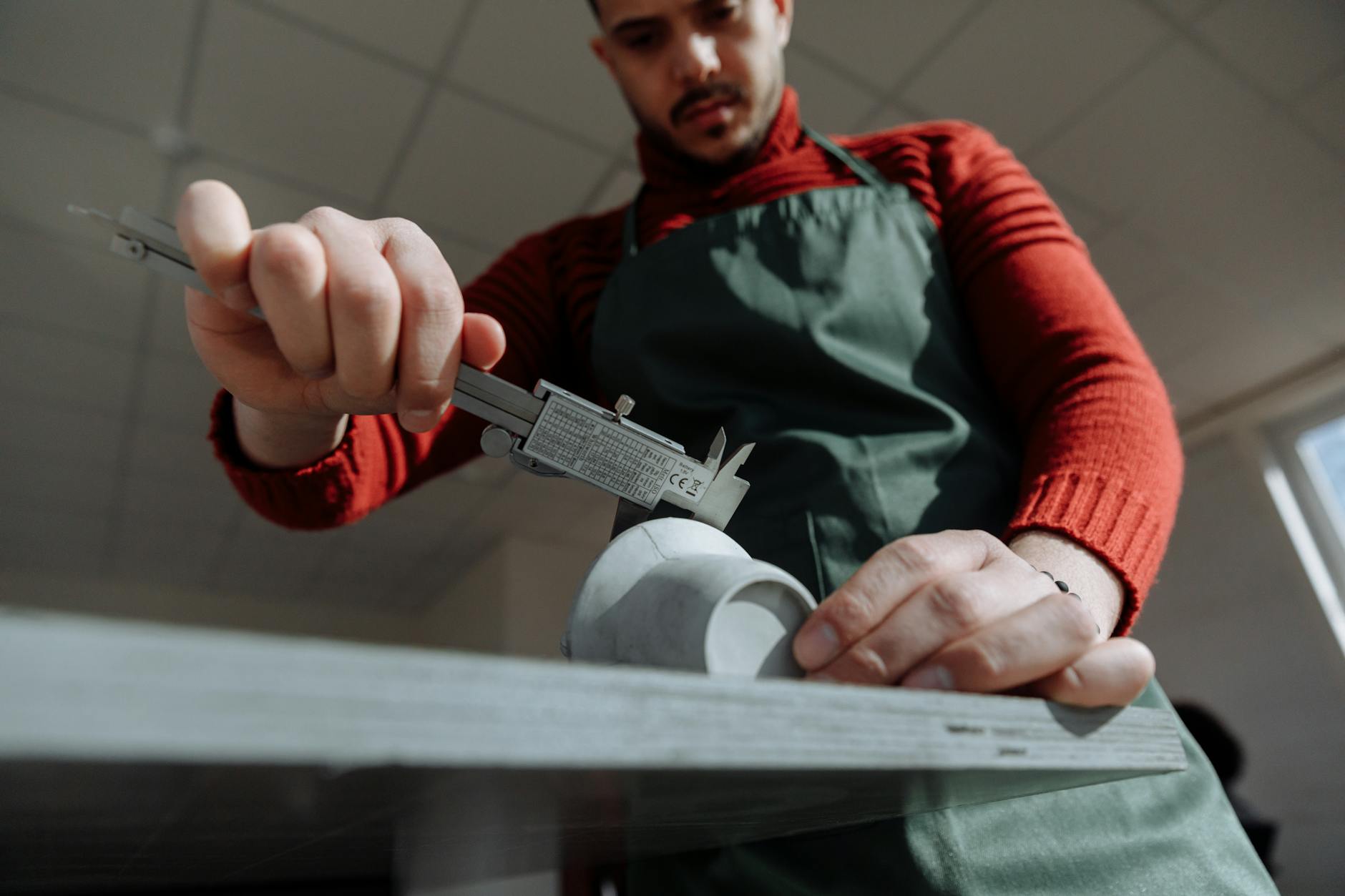
Achieving precise dimensions in 3D printing is crucial for functional prototypes and end-use parts. However, it’s essential to understand that no 3D printing technology offers perfect accuracy. Tolerance refers to the permissible variation in a dimension. A tighter tolerance (e.g., ±0.05 mm) indicates higher precision, while a looser tolerance (e.g., ±0.5 mm) allows for greater deviation. Several factors influence the dimensional accuracy of a 3D printed part, including the printing technology, material properties, printer calibration, and part geometry. This article explores realistic tolerance expectations for common 3D printing processes: Fused Deposition Modeling (FDM), Stereolithography (SLA), Selective Laser Sintering (SLS), and Multi Jet Fusion (MJF).
Dimensional accuracy is not just about the printer’s capability; it also depends heavily on how well the printing process is controlled and optimized. Factors such as temperature control, material consistency, and proper support structure design play a critical role in achieving the desired level of precision. Furthermore, post-processing steps, such as curing, sanding, or painting, can also affect the final dimensions of the printed part. Therefore, a holistic understanding of the entire 3D printing workflow is essential for achieving the best possible results.
Fused Deposition Modeling (FDM) Tolerances
FDM, a widely accessible 3D printing method, extrudes thermoplastic filaments layer by layer. FDM generally has the widest tolerances compared to other technologies. A typical FDM printer achieves tolerances in the range of ±0.2 mm to ±0.5 mm. Factors impacting FDM accuracy include nozzle diameter, layer height, and material shrinkage. Warping, particularly with materials like ABS, can further reduce accuracy. Parts with complex geometries or overhangs may exhibit even larger deviations due to support structures and material sagging. Careful selection of printing parameters, such as infill density and print speed, can help improve dimensional accuracy, but FDM is generally not the best choice when tight tolerances are required.
Material selection also plays a significant role in FDM tolerance. For example, PLA generally exhibits less warping than ABS, resulting in slightly better dimensional accuracy. However, PLA is also more brittle and may not be suitable for all applications. Advanced materials, such as carbon fiber-reinforced filaments, can offer improved stiffness and dimensional stability, but they also require specialized nozzles and printing parameters. Ultimately, achieving the best possible tolerances with FDM requires careful consideration of all these factors and a willingness to experiment with different settings and materials.

Stereolithography (SLA) Tolerances
SLA utilizes a laser to cure liquid resin, resulting in finer details and smoother surfaces than FDM. SLA printers typically achieve tolerances of ±0.05 mm to ±0.1 mm, significantly better than FDM. However, SLA parts are susceptible to warping during the curing process, especially with larger parts or complex geometries. The type of resin used also affects accuracy; some resins shrink more than others during curing. Proper support structure design is crucial to minimize warping and ensure accurate dimensions. Post-curing is essential to fully harden the resin and stabilize the part, but it can also introduce additional dimensional changes. Despite these challenges, SLA remains a popular choice for applications requiring high precision and intricate details.
The accuracy of SLA printing is also influenced by the resolution of the laser and the layer thickness. Lower layer thicknesses generally result in smoother surfaces and more accurate dimensions, but they also increase printing time. The choice of resin is also critical, as some resins are more prone to shrinkage and warping than others. Furthermore, the orientation of the part during printing can affect its dimensional accuracy, particularly for parts with complex geometries. Therefore, careful consideration of all these factors is essential for achieving the best possible results with SLA printing.
Selective Laser Sintering (SLS) Tolerances
SLS uses a laser to fuse powder materials, typically nylon or other polymers. SLS offers good dimensional accuracy, with tolerances generally ranging from ±0.1 mm to ±0.3 mm. A key advantage of SLS is that it doesn’t require support structures, as the surrounding powder bed provides support for the part during printing. This eliminates the risk of support structure-related inaccuracies and allows for printing complex geometries. However, SLS parts can still experience shrinkage during the cooling process, which can affect dimensional accuracy. The type of powder material used also influences tolerance; some materials are more prone to shrinkage than others. Post-processing, such as bead blasting or dyeing, can also slightly alter dimensions. SLS is well-suited for producing functional prototypes and end-use parts with good accuracy and durability.
The thermal management during the SLS process is critical for achieving consistent dimensional accuracy. Maintaining a uniform temperature throughout the powder bed helps to minimize warping and shrinkage. The laser power and scanning speed also play a significant role in the quality of the fusion and the final dimensions of the part. Furthermore, the particle size distribution and flowability of the powder material can affect the packing density and the uniformity of the sintered layer. Therefore, careful control of all these parameters is essential for achieving the best possible results with SLS printing.
Multi Jet Fusion (MJF) Tolerances
MJF, developed by HP, uses inkjet arrays to selectively apply fusing and detailing agents to a powder bed, followed by energy from infrared lamps to fuse the material. MJF offers excellent dimensional accuracy, often surpassing SLS. Typical tolerances for MJF are in the range of ±0.05 mm to ±0.2 mm. Similar to SLS, MJF doesn’t require support structures, enabling the creation of complex geometries. MJF produces parts with consistent mechanical properties and fine details. The controlled application of fusing and detailing agents allows for precise control over the sintering process, resulting in high accuracy and repeatability. MJF is ideal for producing functional prototypes, end-use parts, and complex assemblies with tight tolerances.
The precision of MJF printing is attributed to the precise control over the application of the fusing and detailing agents. These agents selectively alter the thermal properties of the powder material, allowing for precise control over the sintering process. The uniformity of the powder bed and the consistency of the energy distribution from the infrared lamps also contribute to the high dimensional accuracy of MJF parts. Furthermore, the post-processing steps, such as powder removal and cleaning, are carefully controlled to minimize any potential impact on the final dimensions of the part. Therefore, MJF is often the preferred choice for applications requiring the highest levels of precision and repeatability.
Choosing the Right Technology for Your Needs
Selecting the appropriate 3D printing technology depends on your specific requirements. If dimensional accuracy is paramount, SLA or MJF are generally the best choices. For applications where cost is a primary concern and tolerances are less critical, FDM may be suitable. SLS offers a good balance of accuracy, cost, and material properties. Consider the material properties, part complexity, and production volume when making your decision. Consulting with a 3D printing service provider can help you determine the optimal technology and printing parameters for your project. Remember that the quoted tolerances are guidelines; actual accuracy can vary depending on the specific part geometry, material, and printer calibration. Always perform thorough testing to validate the dimensional accuracy of your 3D printed parts.
Beyond the inherent capabilities of each technology, the experience and expertise of the 3D printing operator also play a crucial role in achieving the desired level of precision. A skilled operator can optimize the printing parameters, design effective support structures, and implement appropriate post-processing techniques to minimize dimensional deviations. Furthermore, regular maintenance and calibration of the 3D printer are essential for ensuring consistent performance and accuracy. Therefore, when selecting a 3D printing service provider, it is important to consider their expertise and their commitment to quality control.
Key Takeaways
- 3D printing tolerances
- Dimensional accuracy 3D printing
- SLA tolerance
- MJF tolerance
- FDM tolerance
- SLS tolerance
- 3D printing precision