
Carbon Fiber Reinforced 3D Printing: Strength Beyond Standard Plastics
Unlock unparalleled strength and performance in your 3D printed parts with carbon fiber reinforcement.
The Rise of Carbon Fiber Reinforced 3D Printing
3D printing has revolutionized manufacturing, enabling rapid prototyping and customized production. However, the mechanical properties of standard 3D printing materials, such as ABS and PLA, often limit their use in demanding applications. Carbon fiber reinforced 3D printing overcomes these limitations by embedding carbon fibers within a thermoplastic matrix, creating composite parts with significantly enhanced strength, stiffness, and durability. This technology opens doors to a wide range of industries seeking lightweight, high-performance components.
The integration of carbon fiber into 3D printing processes offers a compelling alternative to traditional manufacturing methods for specific applications. By strategically incorporating carbon fiber, engineers can optimize part designs to maximize strength-to-weight ratios, leading to lighter and more efficient products. This is particularly beneficial in industries like aerospace, automotive, and sports equipment, where weight reduction and performance are critical factors. This blog post delves into the different types of carbon fiber reinforcement in 3D printing and their respective applications.
Chopped Carbon Fiber: Enhanced Stiffness and Dimensional Stability
Chopped carbon fiber reinforcement involves incorporating short strands of carbon fiber into the thermoplastic filament. These short fibers are randomly oriented within the matrix, providing increased stiffness, strength, and dimensional stability compared to unreinforced plastics. While not as strong as continuous fiber reinforcement, chopped carbon fiber offers a cost-effective way to improve the mechanical properties of 3D printed parts without significantly increasing the complexity of the printing process.
The primary advantage of chopped carbon fiber is its ease of use. It can be printed using standard Fused Deposition Modeling (FDM) 3D printers with minimal modifications. The resulting parts exhibit improved tensile strength, flexural modulus, and heat resistance, making them suitable for jigs, fixtures, tooling, and end-use parts that require increased stiffness and dimensional accuracy. Chopped carbon fiber composites are also less prone to warping and shrinking during printing, resulting in more accurate and reliable parts.
Continuous Carbon Fiber: Unmatched Strength and Performance
Continuous carbon fiber reinforcement takes 3D printing to the next level by embedding long, continuous strands of carbon fiber within the thermoplastic matrix. This technique aligns the carbon fibers along specific load paths, maximizing strength and stiffness in those directions. The resulting parts exhibit exceptional mechanical properties, rivaling or even surpassing those of traditionally manufactured composites. Continuous carbon fiber 3D printing is ideal for applications that demand the highest levels of strength, stiffness, and weight reduction.
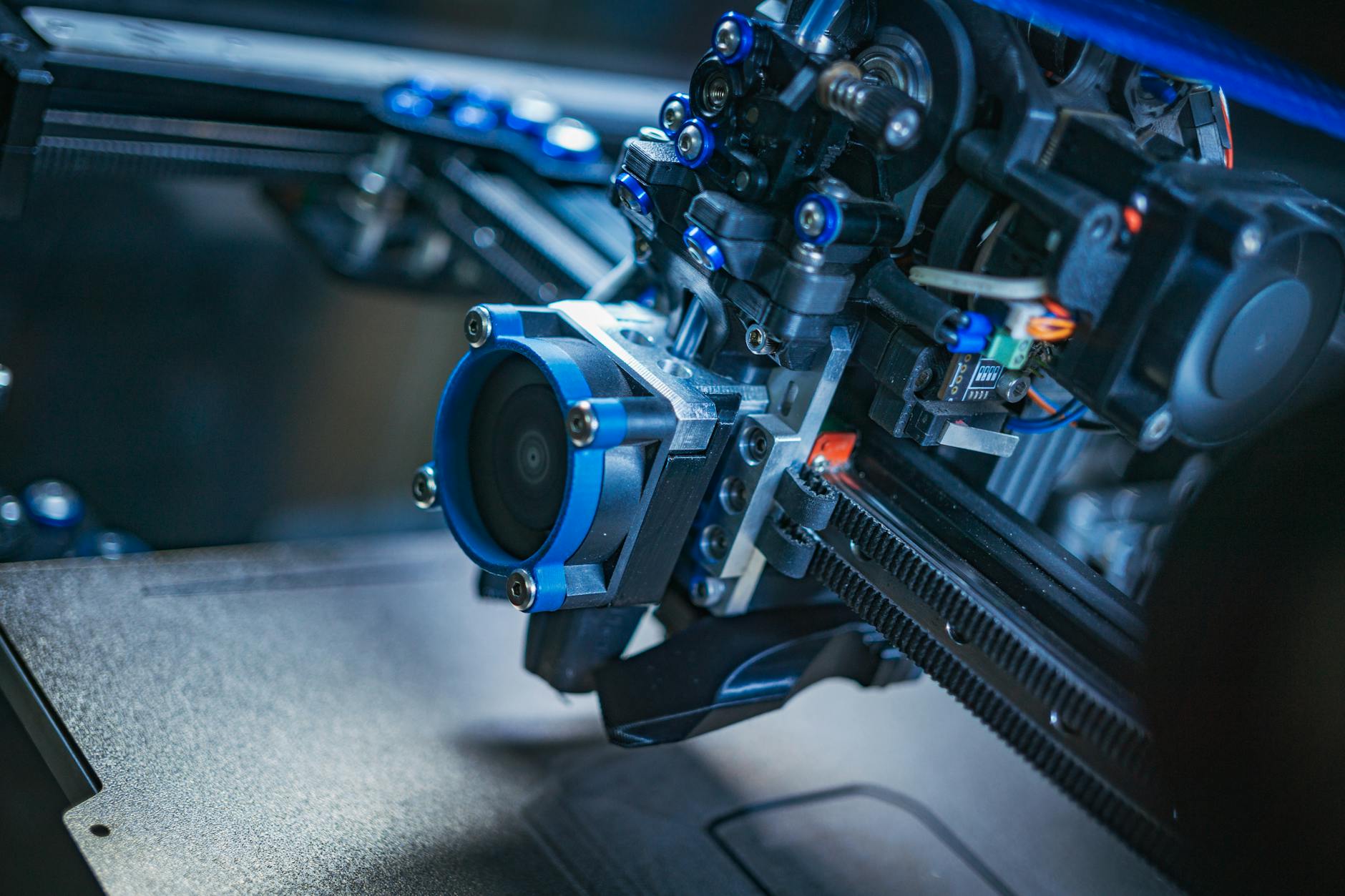
Unlike chopped carbon fiber, continuous carbon fiber 3D printing requires specialized equipment and processes. The printer must be capable of precisely placing the continuous fibers within the part during the printing process. This often involves using multiple nozzles, one for the thermoplastic matrix and another for the carbon fiber. The process is more complex and time-consuming than chopped fiber printing, but the resulting parts offer unparalleled performance. Applications include aerospace components, automotive parts, robotic end-effectors, and high-performance sporting goods.
Applications Across Industries
The versatility of carbon fiber reinforced 3D printing has led to its adoption across a wide range of industries. In aerospace, it is used to create lightweight structural components, drone parts, and tooling. The automotive industry leverages it for producing high-performance parts, such as suspension components, body panels, and interior trim. In sports equipment, it enables the creation of lighter and stronger equipment, such as bicycle frames, tennis rackets, and golf clubs.
Beyond these major industries, carbon fiber reinforced 3D printing is also finding applications in medical devices, robotics, and consumer goods. Its ability to create customized, high-performance parts with complex geometries makes it an attractive option for a variety of applications. As the technology continues to evolve and become more accessible, we can expect to see even wider adoption across diverse industries.
Choosing the Right Carbon Fiber Reinforcement Method
Selecting the appropriate carbon fiber reinforcement method depends on the specific requirements of the application. Chopped carbon fiber is a good choice for parts that require increased stiffness, dimensional stability, and heat resistance, but do not demand the ultimate in strength. It is also a more cost-effective option for lower-volume production runs. Continuous carbon fiber is the preferred choice for applications that demand the highest levels of strength, stiffness, and weight reduction. However, it requires specialized equipment and expertise, and is typically more expensive than chopped fiber printing.
Consider the load-bearing requirements of the part, the desired weight reduction, and the budget constraints when making your decision. It’s also crucial to evaluate the available 3D printing equipment and expertise. Consulting with experienced 3D printing service providers or material suppliers can help you make the optimal choice for your specific application.
The Future of Carbon Fiber 3D Printing
Carbon fiber 3D printing is a rapidly evolving field, with ongoing advancements in materials, processes, and equipment. Researchers are constantly developing new thermoplastic matrices and carbon fiber formulations to further enhance the mechanical properties of 3D printed composites. New printing techniques are also emerging, such as automated fiber placement and in-situ consolidation, which promise to improve the quality and consistency of continuous fiber reinforced parts.
As the technology matures and becomes more accessible, we can expect to see wider adoption of carbon fiber 3D printing across various industries. The ability to create lightweight, high-performance parts with complex geometries will continue to drive innovation and enable new applications. Carbon fiber 3D printing is poised to play a significant role in the future of manufacturing, enabling engineers and designers to create products that are stronger, lighter, and more efficient than ever before.
Key Takeaways
- Carbon fiber 3D printing
- Reinforced 3D printing
- Strong 3D printed parts
- Composite 3D printing
- 3D printing materials