FDM vs. SLA vs. SLS vs. MJF: Choosing the Right 3D Printing Tech for Your Engineering Needs
A detailed comparison to help engineers select the optimal 3D printing technology for their project, leveraging SeekMake for informed decisions.
Understanding the 3D Printing Landscape
3D printing, also known as additive manufacturing, has revolutionized prototyping and production across various industries. For product engineers, understanding the nuances of different 3D printing technologies is crucial for selecting the right process for a given application. This post will delve into four prominent technologies: Fused Deposition Modeling (FDM), Stereolithography (SLA), Selective Laser Sintering (SLS), and Multi Jet Fusion (MJF). We’ll compare their strengths, weaknesses, material compatibility, tolerance capabilities, and cost implications, all while considering how a platform like SeekMake can streamline your decision-making process.
SeekMake’s price calculator allows you to quickly compare costs across different 3D printing technologies and service providers. This is essential because the optimal choice often depends on a complex interplay of factors, and a tool like SeekMake provides the data-driven insights needed to make informed decisions. Throughout this comparison, we’ll highlight how SeekMake can be used to analyze the cost-effectiveness of each technology for specific projects.
Fused Deposition Modeling (FDM): The Workhorse
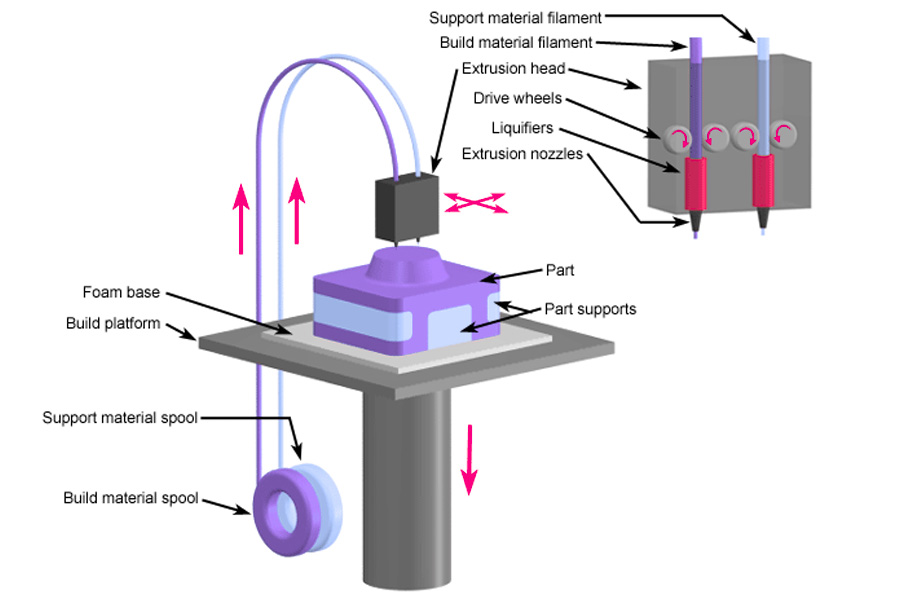
FDM is arguably the most widely accessible 3D printing technology. It works by extruding a thermoplastic filament layer by layer to build a part. Its primary advantages are its low cost and the wide range of available materials, including PLA, ABS, PETG, and nylon. FDM is excellent for rapid prototyping, creating tooling fixtures, and producing parts with relatively simple geometries where high precision isn’t paramount.
However, FDM parts often have visible layer lines and lower dimensional accuracy compared to other technologies. Expect tolerances in the range of ±0.2mm to ±0.5mm, depending on the printer and material. The material properties can also be anisotropic, meaning they vary depending on the direction of printing. When considering FDM, use SeekMake to compare prices across different service bureaus and material options. You’ll find that FDM is generally the most economical choice for larger parts or when using commodity materials. However, factor in the potential need for post-processing to improve surface finish or dimensional accuracy.
Stereolithography (SLA): Precision and Smooth Surfaces
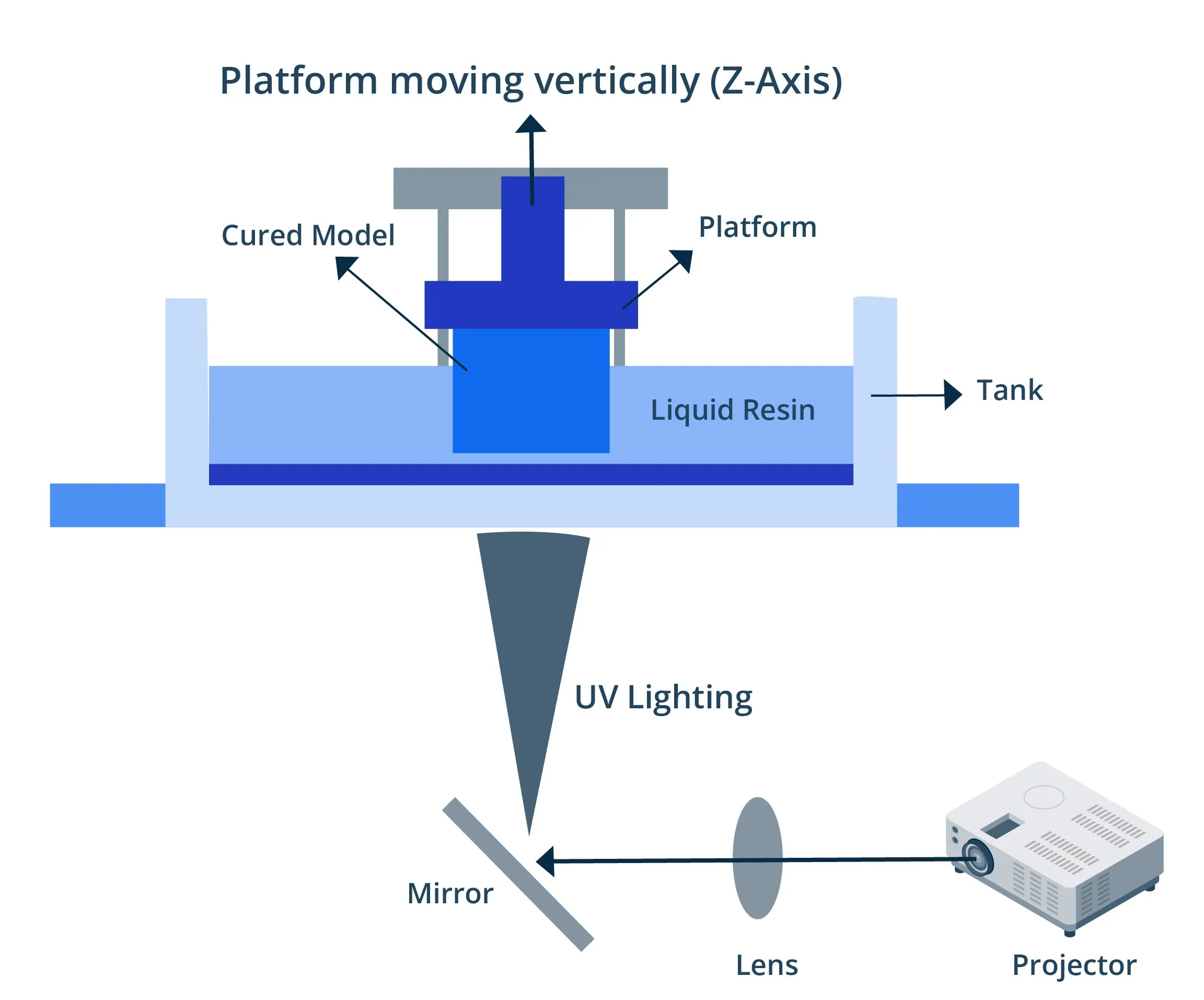
SLA uses a laser to cure liquid resin layer by layer. This results in parts with significantly higher resolution and smoother surface finishes than FDM. SLA is ideal for applications requiring fine details, such as jewelry molds, dental models, and prototypes where aesthetics are important. Tolerances of ±0.05mm to ±0.1mm are achievable, making it suitable for more demanding applications than FDM. A wide range of resins are available, including those with properties mimicking ABS, polypropylene, and even flexible materials.
The downside of SLA is typically higher material costs and a more limited build volume compared to FDM. Additionally, SLA parts may require support structures during printing, which need to be removed and can leave marks on the surface. When evaluating SLA, use SeekMake to compare the cost of different resins and factor in the labor costs associated with support removal and post-curing. SLA is often a good choice when precision and surface finish are critical, and the part size is relatively small.
Selective Laser Sintering (SLS): Functional Prototypes and End-Use Parts
SLS uses a laser to fuse powdered material, typically nylon or other polymers, layer by layer. One of the key advantages of SLS is that it doesn’t require support structures, as the unsintered powder provides support for the part during printing. This allows for the creation of complex geometries and interlocking parts. SLS produces parts with good mechanical properties and isotropic strength, making it suitable for functional prototypes and even end-use parts. Tolerances of ±0.1mm to ±0.3mm are generally achievable.
SLS is more expensive than FDM and SLA, but it offers a compelling combination of design freedom, material properties, and scalability. Common materials include nylon 12, nylon 11, and TPU. Use SeekMake to compare the cost of SLS with other technologies when considering parts that require high strength, durability, and complex geometries. Pay close attention to the material properties listed on SeekMake, as they can vary significantly between different SLS powders.
Multi Jet Fusion (MJF): Speed, Accuracy, and Scalability
MJF is a powder-bed fusion technology developed by HP. It uses inkjet heads to selectively apply fusing and detailing agents to a bed of powder, which is then fused by infrared energy. MJF offers a unique combination of speed, accuracy, and scalability. It produces parts with excellent mechanical properties, fine details, and consistent surface finishes. Tolerances of ±0.08mm to ±0.2mm are typical.
MJF is particularly well-suited for producing functional prototypes and end-use parts in nylon. It’s faster than SLS, and the parts have more consistent mechanical properties. However, MJF is generally more expensive than SLS, especially for small quantities. Use SeekMake to compare the cost of MJF with SLS and other technologies, taking into account the production volume and required lead time. MJF often becomes the most cost-effective option for larger production runs due to its speed and efficiency.
Making the Right Choice with SeekMake
Choosing the right 3D printing technology involves carefully considering the specific requirements of your project, including material properties, dimensional accuracy, surface finish, production volume, and budget. FDM is ideal for low-cost prototyping, while SLA excels in precision and aesthetics. SLS provides a balance of strength and design freedom, and MJF offers speed and scalability for production runs.
SeekMake empowers you to make informed decisions by providing a centralized platform for comparing costs, materials, and lead times across different 3D printing service providers. By leveraging SeekMake’s price calculator, you can quickly assess the cost-effectiveness of each technology for your specific application and optimize your design for manufacturability. Remember to factor in not only the printing cost but also the costs associated with post-processing, material waste, and potential design iterations. With SeekMake, you can confidently navigate the complex world of 3D printing and select the optimal technology to bring your ideas to life.
Key Takeaways
- FDM vs SLA vs SLS
- Choose 3D printing technology
- 3D printing for engineers
- 3D printing materials
- 3D printing cost