
The History of 3D Printing: From Chuck Hull to Today
A journey through the innovations that shaped additive manufacturing, from its inception to the cutting edge.
The Genesis of an Idea: Chuck Hull and Stereolithography (SLA)
The story of 3D printing begins in the 1980s with Chuck Hull, an American engineer who revolutionized manufacturing with his invention of Stereolithography (SLA). Frustrated with the lengthy and expensive process of creating prototypes, Hull sought a faster and more efficient method. His solution was to use UV light to harden liquid resin layer by layer, creating a three-dimensional object from a digital design.
In 1986, Hull received a patent for his SLA technology, marking the official birth of 3D printing. He then co-founded 3D Systems, the first company to commercialize 3D printing technology. Hull’s initial vision was to accelerate prototyping, allowing engineers and designers to quickly iterate on their ideas and bring products to market faster. This early focus on rapid prototyping laid the foundation for the widespread adoption of 3D printing across various industries.
The impact of Hull’s invention cannot be overstated. It not only streamlined the prototyping process but also opened up entirely new possibilities for manufacturing, customization, and design. His work paved the way for the diverse range of 3D printing technologies we see today.
Early Developments: Expanding Beyond Stereolithography
Following the introduction of SLA, other 3D printing technologies emerged, each with its unique approach to additive manufacturing. In 1988, Carl Deckard at the University of Texas developed Selective Laser Sintering (SLS), a process that uses a laser to fuse powdered materials, such as nylon, ceramics, or metals, into a solid object. This opened up new possibilities for creating functional parts with a wider range of materials.
Around the same time, Scott Crump invented Fused Deposition Modeling (FDM), a process where thermoplastic filaments are heated and extruded through a nozzle to build parts layer by layer. Crump later co-founded Stratasys, another key player in the 3D printing industry. FDM technology is known for its relative simplicity and affordability, making it accessible to a broader range of users.
These early innovations expanded the applications of 3D printing beyond just prototyping. SLS allowed for the creation of more durable and functional parts, while FDM brought 3D printing into the hands of hobbyists and small businesses. The 1990s saw continued refinement and commercialization of these technologies, solidifying the foundation for future advancements.

The Rise of RepRap and Desktop 3D Printing
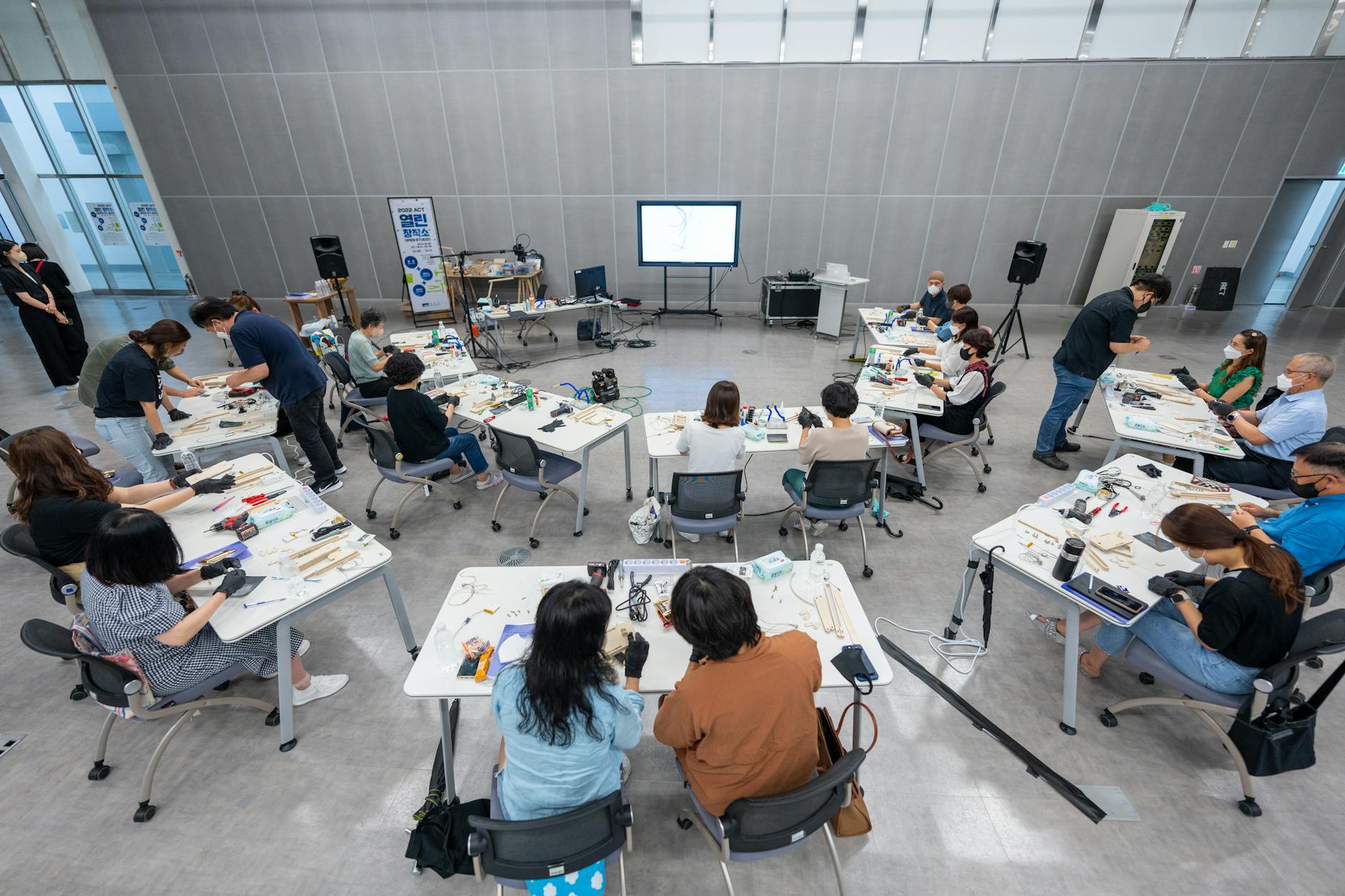
A significant turning point in the history of 3D printing was the RepRap project, initiated in 2005 by Dr. Adrian Bowyer at the University of Bath. RepRap, short for Replicating Rapid Prototyper, aimed to create a self-replicating 3D printer – a machine capable of printing its own components. This open-source project democratized access to 3D printing technology, empowering individuals and communities to build and modify their own printers.
The RepRap project spurred the development of affordable desktop 3D printers, making the technology accessible to hobbyists, educators, and small businesses. Companies like MakerBot emerged, offering user-friendly 3D printers that could be easily set up and operated. This accessibility fueled innovation and experimentation, leading to a surge in creative applications of 3D printing.
The RepRap movement not only lowered the barrier to entry but also fostered a vibrant community of makers and innovators. This collaborative spirit accelerated the development of new materials, software, and techniques, further expanding the capabilities of desktop 3D printing.
3D Printing Today: Diverse Applications and Future Trends
Today, 3D printing has evolved far beyond its initial use in rapid prototyping. It is now employed in a wide range of industries, including aerospace, healthcare, automotive, and consumer goods. In aerospace, 3D printing is used to create lightweight and complex parts for aircraft, improving fuel efficiency and performance. In healthcare, it enables the creation of customized prosthetics, implants, and surgical guides, enhancing patient outcomes.
The automotive industry utilizes 3D printing for creating tooling, fixtures, and even end-use parts for vehicles. Consumer goods companies are leveraging 3D printing to personalize products and offer on-demand manufacturing. As materials science advances, we are seeing a growing range of printable materials, including high-performance polymers, metals, and composites.
Looking ahead, 3D printing is poised to play an even greater role in shaping the future of manufacturing. Trends such as bioprinting (creating living tissues and organs), 4D printing (objects that change shape over time), and distributed manufacturing (producing goods closer to the point of consumption) hold immense promise. As the technology continues to mature and become more affordable, 3D printing will undoubtedly transform the way we design, create, and interact with the world around us.
Key Takeaways
- History of 3D printing
- 3D printing timeline
- Additive manufacturing history
- SLA invention
- 3D printing technology