
Injection Molding Materials: ABS, PC, PP, and Which to Choose
A comprehensive guide to selecting the right thermoplastic for your injection molding project.
Understanding Thermoplastics for Injection Molding
Injection molding is a versatile manufacturing process widely used to produce high volumes of plastic parts with excellent repeatability and precision. The success of injection molding heavily relies on the selection of the appropriate thermoplastic material. Thermoplastics are polymers that become pliable or moldable above a specific temperature and solidify upon cooling. This characteristic allows them to be repeatedly melted and reshaped, making them ideal for injection molding. Several thermoplastics are commonly used in injection molding, each offering a unique combination of properties that make them suitable for different applications. This article will delve into three popular choices: Acrylonitrile Butadiene Styrene (ABS), Polycarbonate (PC), and Polypropylene (PP).
Selecting the right material is critical for ensuring the final product meets the required performance, aesthetics, and cost objectives. Factors such as mechanical strength, chemical resistance, temperature stability, and processability must be carefully considered during the material selection process. A thorough understanding of the properties and characteristics of different thermoplastics is essential for making informed decisions and achieving optimal results in injection molding.
Acrylonitrile Butadiene Styrene (ABS): Properties and Applications
ABS is a widely used thermoplastic known for its excellent balance of properties, including good impact resistance, tensile strength, and heat resistance. It is an amorphous polymer, meaning it lacks a defined melting point, which contributes to its ease of processing and ability to be molded into complex shapes. ABS is also relatively inexpensive compared to other engineering plastics, making it a cost-effective choice for many applications.
Key properties of ABS:
- Impact Resistance: ABS exhibits high impact resistance, making it suitable for parts that need to withstand shocks and impacts.
- Tensile Strength: ABS has good tensile strength, allowing it to resist deformation under tensile loads.
- Heat Resistance: ABS can withstand moderate temperatures without significant deformation.
- Processability: ABS is easy to process using injection molding, allowing for complex geometries and tight tolerances.
- Surface Finish: ABS produces a smooth, glossy surface finish, making it suitable for aesthetically pleasing parts.
Common applications of ABS: Automotive interior parts, consumer electronics enclosures, toys, and appliances.
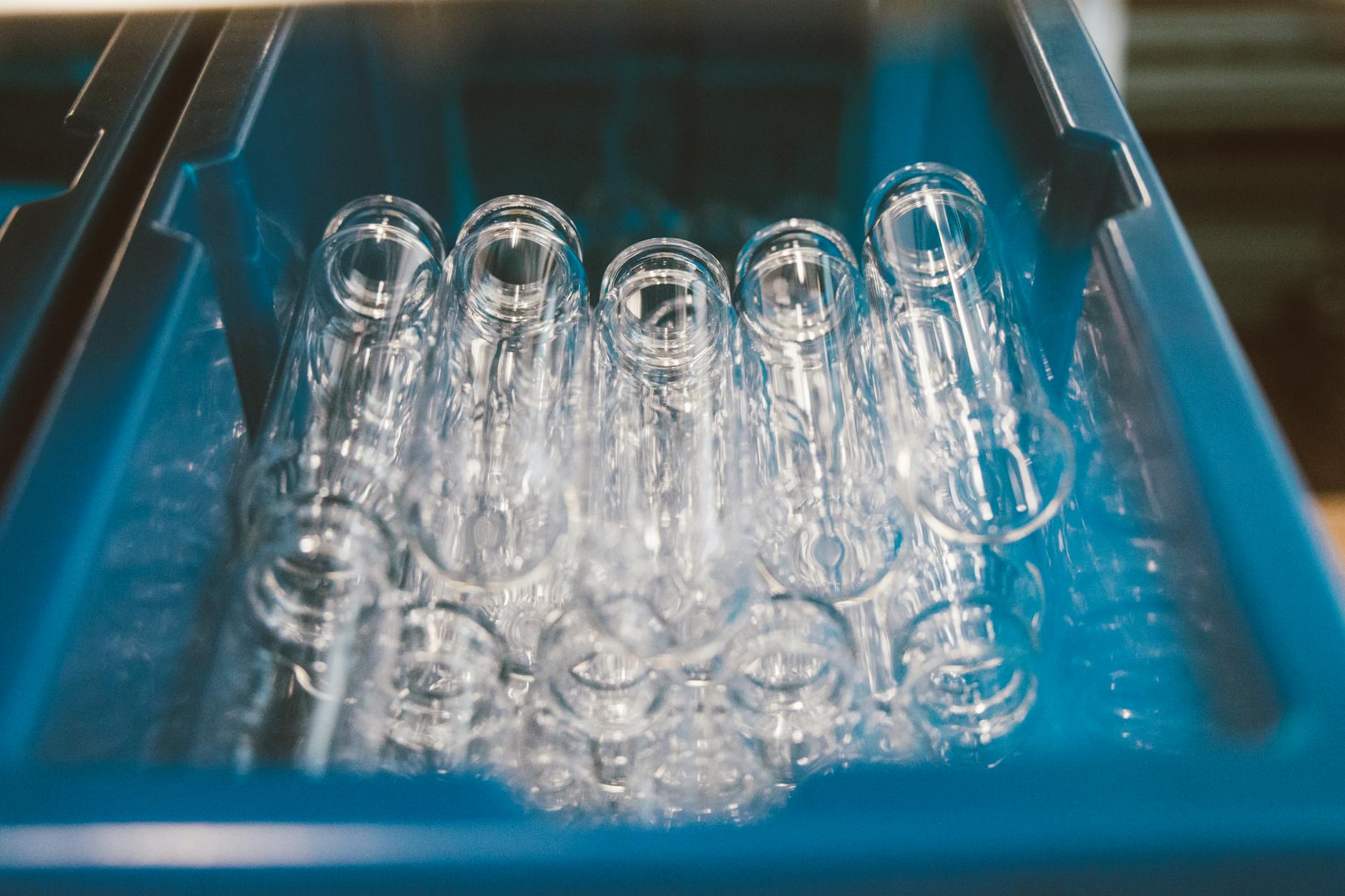

Polycarbonate (PC): High Strength and Clarity
Polycarbonate (PC) is an amorphous thermoplastic characterized by its exceptional impact strength, high transparency, and excellent heat resistance. PC is significantly stronger than ABS and offers superior dimensional stability, making it suitable for demanding applications where performance is critical. However, PC is generally more expensive than ABS.
Key properties of PC:
- Impact Strength: PC boasts outstanding impact strength, even at low temperatures, making it ideal for safety-critical applications.
- Transparency: PC is naturally transparent, allowing for light transmission and optical clarity.
- Heat Resistance: PC exhibits high heat resistance, withstanding temperatures up to 135°C without significant deformation.
- Dimensional Stability: PC maintains its shape and size under varying temperatures and loads.
- UV Resistance: PC can be formulated with UV stabilizers to resist degradation from sunlight exposure.
Common applications of PC: Safety helmets, automotive lighting lenses, electronic enclosures, and medical devices.
Polypropylene (PP): Lightweight and Chemical Resistant
Polypropylene (PP) is a semi-crystalline thermoplastic known for its low density, excellent chemical resistance, and good fatigue resistance. PP is one of the lightest thermoplastics available, making it suitable for weight-sensitive applications. It also exhibits excellent resistance to a wide range of chemicals, including acids, bases, and solvents. PP is typically less expensive than both ABS and PC.
Key properties of PP:
- Low Density: PP is a lightweight material, reducing the overall weight of the final product.
- Chemical Resistance: PP is resistant to a wide range of chemicals, making it suitable for corrosive environments.
- Fatigue Resistance: PP can withstand repeated bending and flexing without failure.
- Electrical Insulation: PP is an excellent electrical insulator.
- Low Cost: PP is a relatively inexpensive thermoplastic.
Common applications of PP: Packaging containers, automotive bumpers, medical devices, and consumer products.
Material Selection Considerations
Choosing the right material is a crucial step in the injection molding process. Several factors should be considered when selecting a thermoplastic material, including the desired mechanical properties, environmental conditions, and cost constraints.
Mechanical Properties: Consider the required strength, stiffness, impact resistance, and fatigue resistance of the part. If high impact strength is critical, PC may be the best choice. If moderate strength and good impact resistance are sufficient, ABS may be a more cost-effective option. For lightweight applications requiring good chemical resistance, PP may be the preferred choice.
Environmental Conditions: Consider the temperature range, chemical exposure, and UV exposure the part will be subjected to. PC offers excellent heat resistance and can be formulated with UV stabilizers. PP provides excellent chemical resistance. ABS has moderate heat resistance and is susceptible to UV degradation.
Cost: Consider the cost of the material and the manufacturing process. PP is generally the least expensive option, followed by ABS and then PC. However, the overall cost should be evaluated in conjunction with the required performance and durability of the part.
By carefully considering these factors, engineers and designers can select the optimal thermoplastic material for their injection molding project, ensuring the final product meets the required specifications and performs reliably in its intended application.
Processing Considerations for Each Material
While material properties are important, understanding the processing characteristics of each thermoplastic is equally crucial for successful injection molding. Each material has unique requirements for mold temperature, injection pressure, and cooling time.
ABS Processing: ABS is relatively easy to process, with a wide processing window. Mold temperatures typically range from 40-70°C, and injection pressures range from 50-100 MPa. Cooling times are generally short.
PC Processing: PC requires higher processing temperatures and pressures compared to ABS. Mold temperatures typically range from 80-120°C, and injection pressures range from 80-150 MPa. Proper drying of the resin is essential to prevent hydrolysis.
PP Processing: PP has a relatively low processing temperature and pressure. Mold temperatures typically range from 20-60°C, and injection pressures range from 30-70 MPa. Due to its high crystallinity, PP can exhibit significant shrinkage, which must be accounted for in mold design.
Optimizing the processing parameters for each material is essential for achieving high-quality parts with minimal defects. Careful attention to mold design, temperature control, and injection parameters is crucial for maximizing the performance and aesthetics of the final product.
Key Takeaways
- Injection molding materials
- ABS injection molding
- Polypropylene molding
- Material selection injection molding
- Thermoplastics
- Plastic materials
- Injection molding