
SLS 3D Printing: The Complete Guide for Engineers
A comprehensive overview of Selective Laser Sintering for engineering applications.
Understanding Selective Laser Sintering (SLS)
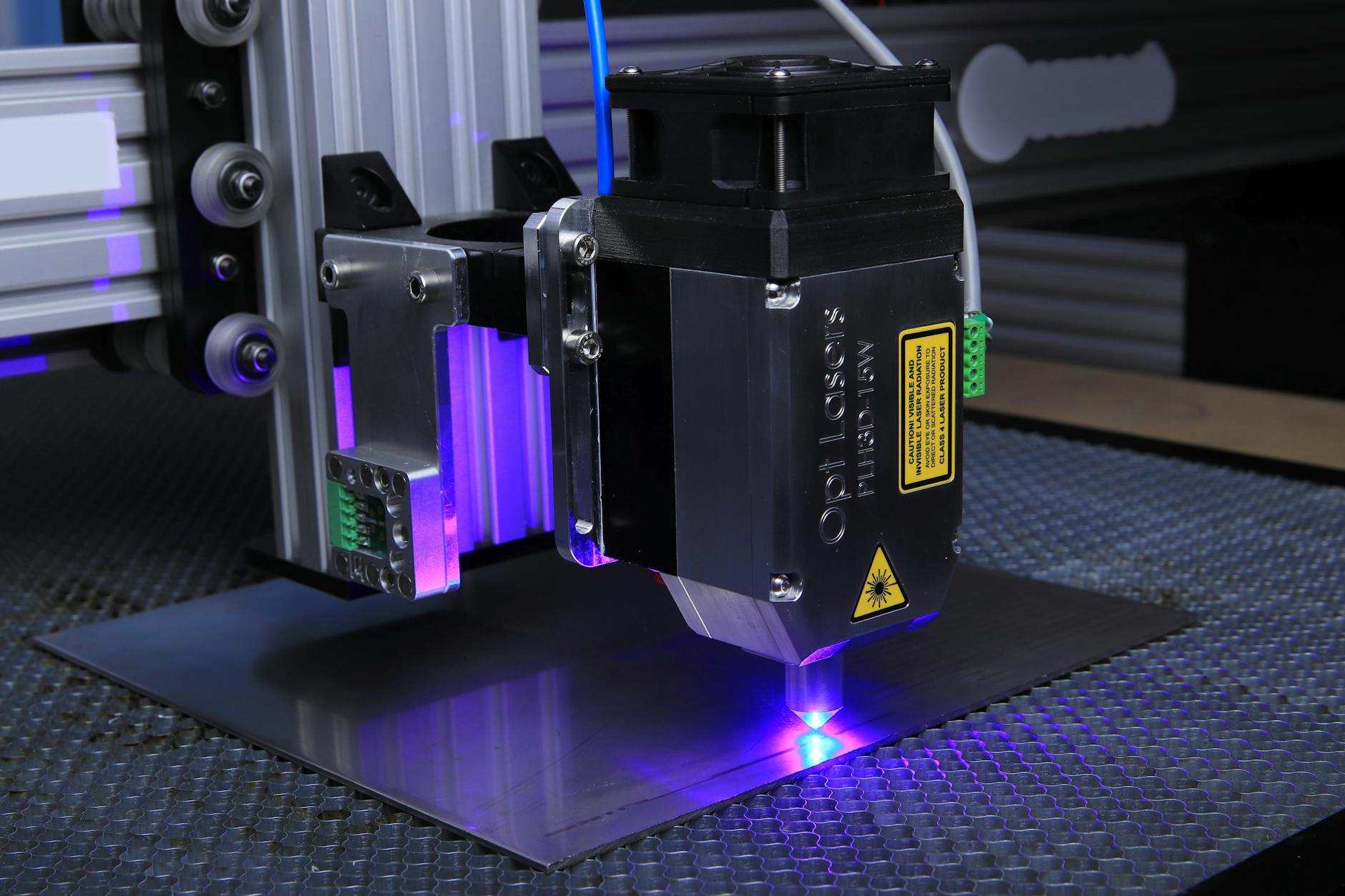
Selective Laser Sintering (SLS) is an additive manufacturing technology that utilizes a laser to fuse powdered material into a solid three-dimensional structure. Unlike other 3D printing methods that rely on liquid resins or filament extrusion, SLS employs a powder bed fusion process. Here’s how it works: a thin layer of powdered material, typically a polymer like nylon, is spread across a build platform. A high-powered laser then selectively scans the cross-section of the part, sintering (fusing) the powder particles together. After each layer is completed, the build platform lowers, a new layer of powder is spread, and the process repeats until the entire part is built. One of the key advantages of SLS is that it doesn’t require support structures for complex geometries, as the unsintered powder surrounding the part provides support during the printing process. This allows for intricate designs and nested parts to be created with ease. The unused powder is also recyclable, leading to less waste. SLS is known for producing parts with excellent mechanical properties, making it a popular choice for functional prototypes and end-use parts.
Advantages of SLS 3D Printing
SLS 3D printing offers several advantages over other manufacturing methods, making it a valuable tool for engineers. Firstly, the absence of support structures allows for greater design freedom and the ability to create complex geometries that would be difficult or impossible to manufacture using traditional methods. This is particularly beneficial for creating intricate internal features, interlocking parts, and complex assemblies. Secondly, SLS produces parts with excellent mechanical properties, including high tensile strength, durability, and heat resistance. This makes SLS parts suitable for functional prototypes, end-use parts, and demanding applications. Thirdly, SLS is a relatively fast process, especially for producing multiple parts simultaneously. The ability to nest parts within the build volume maximizes efficiency and reduces production time. Fourthly, the use of powdered materials results in minimal material waste, as the unsintered powder can be recycled and reused. Finally, SLS is compatible with a wide range of materials, including nylon, TPU, and composites, allowing engineers to choose the material that best suits their application.
Ideal Applications for SLS Technology
SLS 3D printing is well-suited for a wide range of applications across various industries. In the aerospace industry, SLS is used to create lightweight, high-strength components for aircraft interiors and unmanned aerial vehicles (UAVs). The automotive industry utilizes SLS for rapid prototyping of parts, creating custom tooling, and producing end-use parts for low-volume production vehicles. In the medical field, SLS is used to create customized prosthetics, orthotics, and surgical guides. The technology is also beneficial for creating patient-specific implants with complex geometries. Consumer goods companies use SLS for product development, creating prototypes, and producing customized products. SLS is also used in the manufacturing of jigs, fixtures, and tooling for various industrial applications. The ability to produce durable, functional parts with complex designs makes SLS an ideal choice for these applications. Furthermore, the scalability of SLS allows for both small-batch and larger-scale production runs, making it a versatile manufacturing solution.
Materials Used in SLS 3D Printing: Focus on Nylon
While SLS is compatible with a variety of materials, nylon is one of the most commonly used due to its excellent mechanical properties, durability, and versatility. Nylon SLS parts exhibit high tensile strength, impact resistance, and heat resistance, making them suitable for a wide range of applications. There are several types of nylon used in SLS, including PA11 and PA12, each with slightly different properties. PA12 is known for its excellent strength and stiffness, while PA11 offers improved ductility and impact resistance. In addition to nylon, SLS can also be used with other materials such as TPU (thermoplastic polyurethane), which offers flexibility and elasticity, and composite materials, which combine nylon with reinforcing fibers like carbon fiber or glass beads to enhance strength and stiffness. The choice of material depends on the specific requirements of the application, such as the desired mechanical properties, environmental conditions, and cost considerations. Material selection is a crucial step in the SLS process, as it directly impacts the performance and longevity of the final part.
SLS 3D Printing Services in Chicago
For engineers and businesses in the Chicago area looking to leverage the benefits of SLS 3D printing, several service providers offer SLS printing capabilities. These 3D printing services provide access to state-of-the-art SLS equipment, experienced engineers, and a range of material options. When choosing an SLS 3D printing service, it’s important to consider factors such as the provider’s experience, the quality of their equipment, the materials they offer, and their pricing structure. It’s also helpful to review case studies and testimonials to assess their track record of success. Many SLS 3D printing services offer design assistance, material selection guidance, and post-processing services to ensure that your parts meet your specific requirements. Local providers can offer quicker turnaround times, easier communication, and the opportunity to visit the facility and discuss your project in person. Whether you need a single prototype or a large production run, a reputable SLS 3D printing service in Chicago can help you bring your designs to life.
The Future of SLS 3D Printing
SLS 3D printing continues to evolve, with ongoing advancements in materials, equipment, and software. Researchers are constantly developing new materials with improved mechanical properties, heat resistance, and chemical resistance, expanding the range of applications for SLS. Equipment manufacturers are developing faster and more precise SLS printers, enabling larger build volumes and finer feature resolutions. Software advancements are improving design optimization, process control, and data analytics, making the SLS process more efficient and reliable. As SLS technology matures, it is becoming increasingly accessible and affordable, making it a viable manufacturing solution for a wider range of industries and applications. The future of SLS 3D printing is bright, with the potential to revolutionize manufacturing processes and enable the creation of innovative products that were previously impossible to produce.
Key Takeaways
- SLS 3D printing
- Nylon 3D printing
- Selective laser sintering
- 3D printing service Chicago
- Additive manufacturing
- Rapid prototyping